Let’s clear something up before we begin.
A corporate offsite is not a picnic.
And it is definitely not a “break from work” in the way people casually describe it.
When done right, an offsite is one of the most effective formats for employee recognition events, alignment, and reset. When done poorly, it becomes an expensive vacation where nothing really changes once people are back at their desks.
The difference lies in intent, location, and design.
Over the last few years, organisations have started using offsites not just for bonding, but for deeper employee recognition activities and cultural reinforcement. The location is no longer a backdrop. It becomes part of the message.
At SKIL Events, this philosophy shapes how corporate offsites are planned across the country. And one of the strongest examples of this approach came from a corporate offsite executed for Reliance Industries Limited in Lonavala.
Before we talk about the best places in India, it helps to understand what actually makes a location work.
Most offsites fail because they rely too heavily on schedules and too little on environment.
People don’t reset just because the agenda says “team building from 3 to 5”. They reset when the environment forces them to step out of routine.
According to a 2023 Harvard Business Review study, teams that participate in immersive offsite experiences show a 25% improvement in collaboration and trust, compared to teams that engage in indoor or low-disruption activities.
Reference: https://hbr.org/2023/01/why-offsites-work-when-they-are-designed-right
That disruption often comes from the location itself.
Remote terrain, unfamiliar movement, controlled environments, or physical effort all trigger a psychological shift. And that shift is what allows employee rewards and recognition efforts to actually land.

One of the most effective corporate offsite locations in India is Lonavala, not because it is convenient, but because it demands commitment.
For Reliance Industries Limited’s annual offsite, SKIL Events selected Delta by Della, a property that does not ease people in gently.
Reaching the location itself involved either a forest trek or a ferry ride. That journey was not a logistical hurdle. It was intentional. From the moment attendees stepped out of their comfort zone, the mindset began to shift.
This is a critical insight for employee recognition day planning. Recognition does not always need applause. Sometimes it needs challenge.
Delta by Della operates with a military ethos, and that atmosphere shaped the entire offsite.
Uniformed officers welcomed attendees with crisp salutes. Movements were controlled. Transitions were deliberate. Nothing felt casual.
This was not theatrics. It was tone-setting.
For large organisations, especially those focused on leadership, discipline, and execution, this kind of environment reinforces values without a single slide deck.
According to Gallup, recognition experiences that align with organisational culture are 2.6 times more effective than generic engagement initiatives.
Reference: https://www.gallup.com/workplace/236441/employee-recognition-low-cost-high-impact.aspx
The location did half the work before the first activity even began.
One of the most common mistakes in corporate offsites is confusing fun with effectiveness.
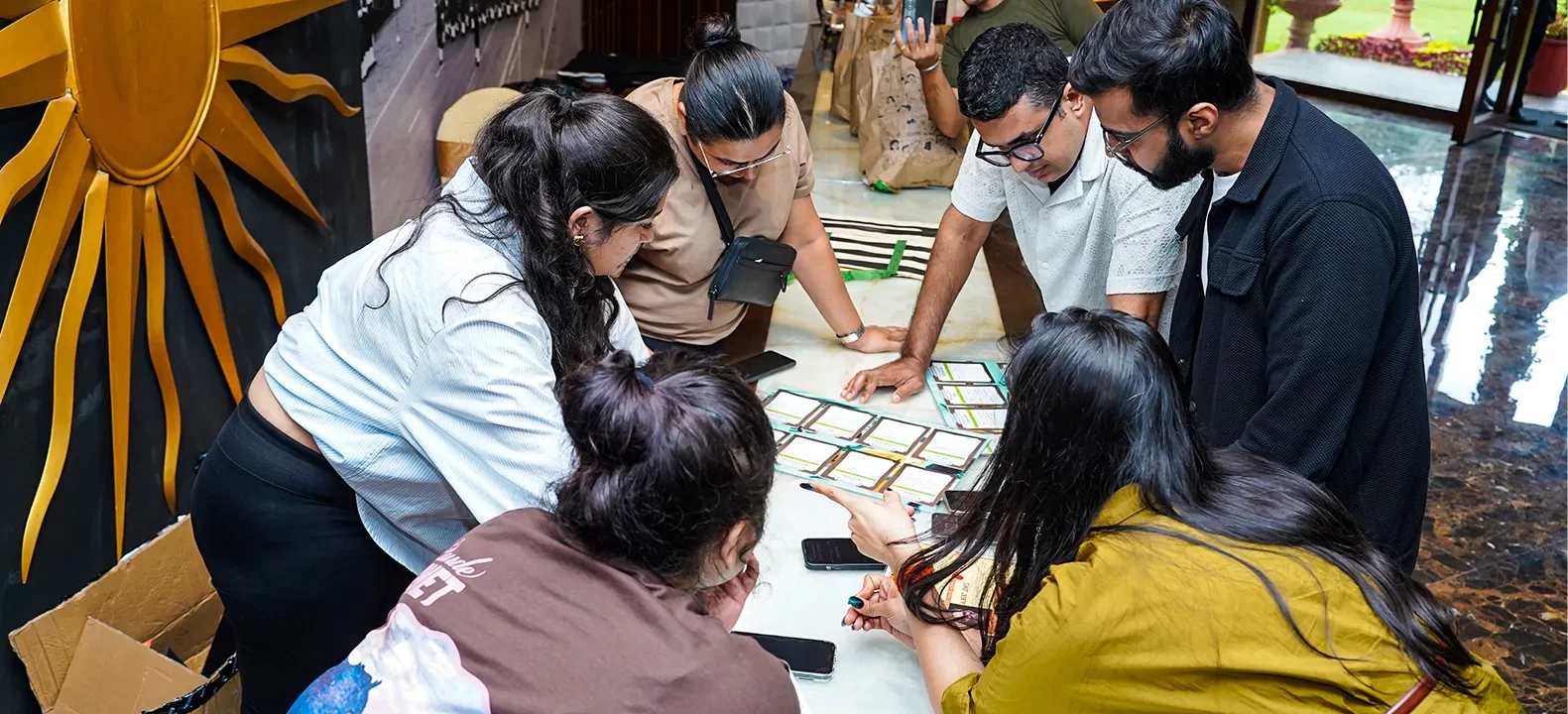
At the Reliance offsite, team-building activities like Squad Games and Maverick were designed with intent. These were not icebreakers. They were pressure environments.
Teams had to strategise, adapt, communicate, and make decisions with the clock running. Failure was visible. Success was earned.
This kind of design reveals behaviour. Who leads. Who listens. Who freezes. Who adapts.
A McKinsey study found that experiential team challenges improve decision-making and leadership alignment by up to 30% compared to discussion-based workshops.
Reference: https://www.mckinsey.com/capabilities/people-and-organizational-performance/our-insights/team-effectiveness
For employee recognition activities, this matters. Recognition feels stronger when it is tied to observed behaviour, not abstract appreciation.
An offsite cannot stay intense throughout. Release is part of the design.
At Lonavala, evenings shifted into a completely different pace. The “Off the Grid” themed night introduced masks, neon accents, immersive props, and curated energy.
This was not entertainment for distraction. It was decompression by design.
Psychologically, this transition matters. According to Forbes, offsites that balance structured challenge with controlled relaxation see a 40% increase in participant satisfaction.
Reference: https://www.forbes.com/sites/forbescoachescouncil/2022/why-team-offsites-work
People need space to let go, but without breaking the shared rhythm built during the day.
Based on multiple corporate offsites across India, certain patterns emerge.
The most effective locations usually offer:
This is why destinations like Lonavala, Coorg, Rishikesh, parts of Rajasthan, and select Himalayan retreats consistently work for employee recognition events.
It is not about luxury. It is about intentional discomfort and reset.
Many organisations think of recognition as a ceremony.
But modern employee rewards and recognition often work better when embedded into experience rather than isolated as an announcement.
At the Reliance offsite, recognition happened quietly. Through roles assigned. Through challenges overcome. Through shared difficulty and shared success.
According to SHRM, experiential recognition formats improve long-term recall by 35% compared to traditional award ceremonies.
Reference: https://www.shrm.org/resourcesandtools/hr-topics/employee-relations/pages/recognition-programs.aspx
People remember what they live through, not just what they are told.
At SKIL Events, offsites are designed backwards.
The starting point is not the location or the activity. It is the outcome. What should teams feel when they leave? What should change when they return?
Logistics, flow, pacing, and transitions are then aligned around the natural cues of the environment so the offsite feels deliberate, not assembled.
That approach ensures the experience feels cohesive, not like a collection of activities.
The most effective corporate offsites in India are not always the easiest to reach.
They are the ones that:
For organisations investing in employee recognition day, this matters deeply. Recognition that comes with effort feels earned. And effort builds respect.
A corporate offsite is not about escaping work. It is about stepping away from habit.
When location, design, and intent align, offsites become powerful tools for recognition, alignment, and cohesion.
The Reliance Industries offsite at Lonavala was not a resort break. It was a designed disconnect. And that is why it worked.
For companies looking to invest meaningfully in employee recognition events, the best places in India are those that challenge teams just enough to bring them closer together.
That is where real impact begins.