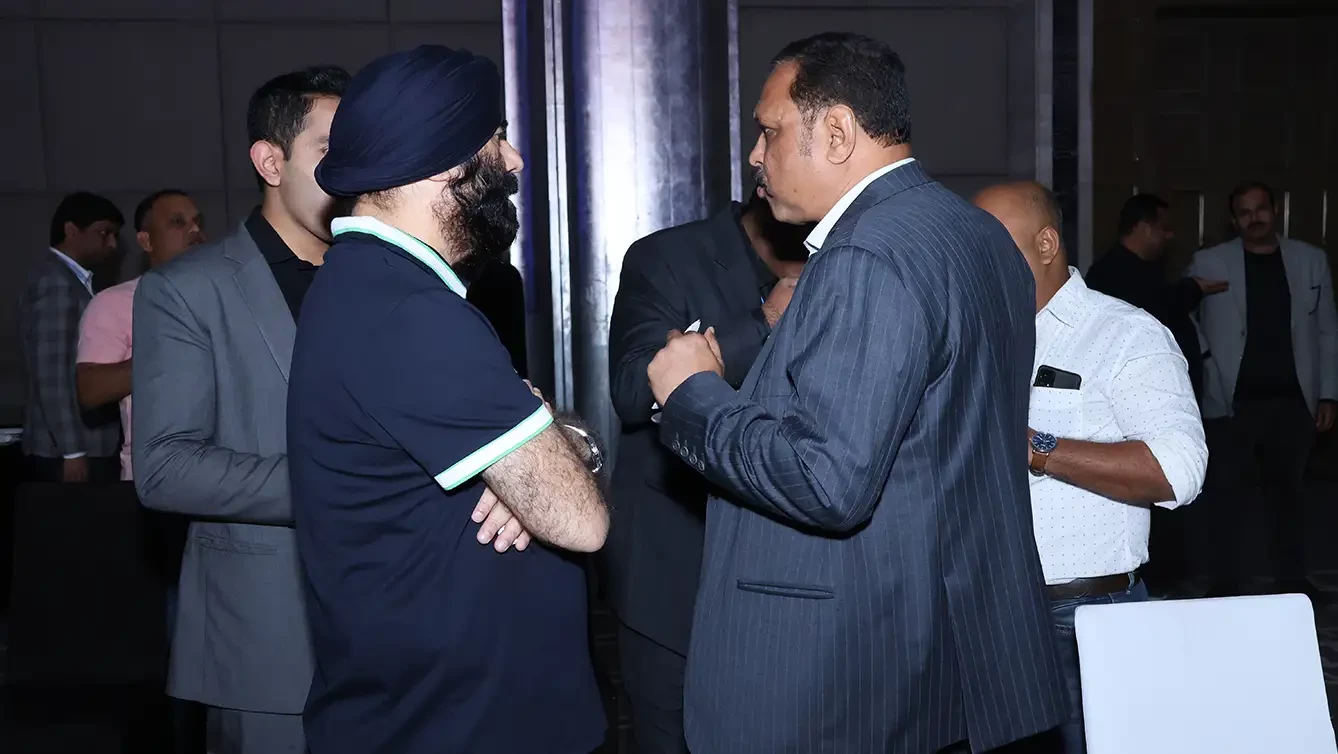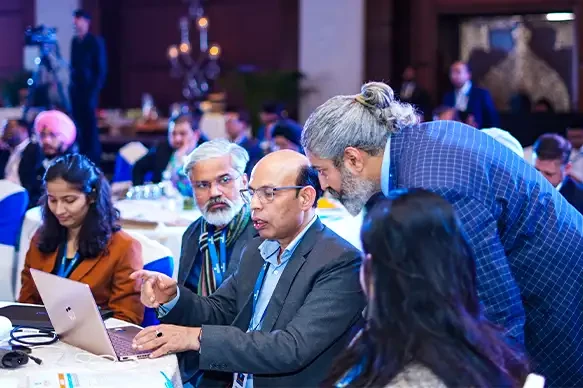
There’s a strange quiet that settles in after a good event.
The stage is dismantled. The branding comes down. Someone drops a “great job, team” on WhatsApp. And then everyone moves on to the next thing.
This is the moment where most events quietly lose money.
Not because the event wasn’t good.
Not because the audience wasn’t right.
But because what followed was vague, delayed, or painfully generic.
At SKIL Events, we’ve seen this pattern repeat across industries. Brands invest months planning an experience, then treat post-event follow-up like admin work. A thank-you email. A mass deck. A few rushed calls. Then silence. And finally, confusion about why “great leads” didn’t convert.
Here’s the reality the best event management companies in India understand deeply:
Events don’t create customers. Follow-up does.

Events compress trust. That’s their superpower.
People show up open-minded. They listen longer. They engage more honestly than they would over ten cold calls. For a few hours, barriers drop.
But attention decays fast.
Insights published by Harvard Business Review indicate that nearly 80% of leads disengage if follow-up doesn’t happen within the first 48 hours. That window is unforgiving.
This is why the best event management companies don’t treat follow-up as an afterthought. They design it alongside the stage agenda, not after the chairs are stacked.
At SKIL Events, follow-up workflows are mapped before the event even goes live. Because once momentum fades, no CRM automation can resurrect it.
Let’s address the most common mistake.
One email.
Sent to everyone.
Same subject line. Same body copy.
That’s not a follow-up. That’s a polite goodbye.
Real follow-up starts with acknowledging that people experienced the event differently. Some came for a keynote. Some spent serious time at a demo. Some had one quiet, high-quality conversation that mattered more than anything on stage.
Data shared by HubSpot shows that personalised follow-up communication improves response rates by over 40% compared to generic outreach.
The takeaway is simple. Behaviour beats attendance. Who engaged matters more than who registered.
This is where the best event management companies in India stand apart. They don’t just deliver attendee lists. They help brands interpret signals.
There’s a piece of advice that refuses to die.
“Give it a few days before following up.”
That advice made sense when inboxes were quieter. It doesn’t anymore.
Interest doesn’t need breathing room. It needs continuity.
According to internal sales effectiveness studies shared by Salesforce, leads contacted within one to two days of an interaction are far more likely to convert than those contacted later.
This doesn’t mean pitching immediately. It means acknowledging while the experience is still fresh.
At SKIL Events, we recommend thinking of follow-up in layers:
Trying to squeeze all of this into one message usually weakens all of it.
Another trap brands fall into is content overload.
Post-event emails stuffed with decks, videos, photos, and links often overwhelm rather than engage. People don’t want everything. They want what’s relevant to them.
Referencing a specific session, question, or interaction signals attention. It tells the recipient they weren’t just a badge scan.
Insights from McKinsey & Company show that decision-makers respond more positively to follow-up that references shared context rather than generic value propositions.
This is why the best event management companies focus on capturing narrative moments during events. Follow-up should continue the conversation, not restart it from zero.
Here’s where many post-event strategies collapse.
The tone shifts too fast.
One minute it’s community and dialogue. The next minute it’s “Let’s schedule a call.”
That jump breaks trust.
Research published by Gartner suggests that buyers engage more willingly when early post-event communication focuses on understanding needs rather than pushing solutions.
The smartest follow-ups ask questions instead of making offers:
Questions create permission. Pitches demand it.
Even the most thoughtful follow-up strategy fails if internal teams aren’t aligned.
Marketing sends one message. Sales sends another. Leadership says something else entirely in meetings.
From the outside, this looks like confusion. From the inside, it’s usually just a poor handover.
Research from Forrester highlights that organisations with aligned sales and marketing teams experience significantly higher lead-to-customer conversion after events.
The best event management companies in India act as translators here. They help ensure insights gathered during events actually reach the teams responsible for follow-up.
If context doesn’t move internally, no automation tool will save the process.
Here’s a counterintuitive truth.
Some leads don’t convert because they’re pushed too hard, too fast.
Silence doesn’t always mean disinterest. Sometimes it means evaluation.
Experienced teams understand pacing. They know when to follow up, and when to pause.
At SKIL Events, restraint is treated as a strategy, not a risk. Respecting timing often preserves relationships that aggressive follow-up quietly destroys.
Another missed opportunity is how brands talk about the event afterward.
“Our event was a success.”
“We had great turnout.”
That means nothing to a lead.
What does matter is reassurance.
That others like them were present.
Similar questions were raised.
That the conversation wasn’t isolated.
According to insights from Edelman, trust increases when people see their concerns echoed by peers rather than framed as isolated issues.
Smart follow-up weaves this subtly into messaging without bragging. The event becomes proof of relevance, not a trophy.
Yes, track open rates. Click-throughs. Meeting bookings.
But many conversions happen off the dashboard.
A LinkedIn message referencing a hallway conversation.
A warm introduction from a shared contact.
A follow-up call that references a panel discussion, not a pitch deck.
The best event management companies design systems that allow for human judgment alongside automation. Because not everything valuable shows up neatly in a report.
Many teams spend more time polishing post-event decks than nurturing post-event conversations.
They optimise slides. They forget people.
Events create proximity. Follow-up determines whether that proximity turns into trust.
At SKIL Events, post-event follow-up is treated as an extension of experience design. The same care applied to stage flow, audience journey, and energy management continues long after the event ends.
Turning Momentum Into Movement
The difference between leads and customers is rarely the event itself.
It’s what happens after the applause fades.
Clear timing. Personal context. Aligned teams. Respectful pacing. Honest dialogue.
This is why brands continue to partner with the best event management companies in India. Not just to create moments, but to convert them into outcomes.
Because a great event opens the door.
But follow-up decides whether anyone actually walks through it.