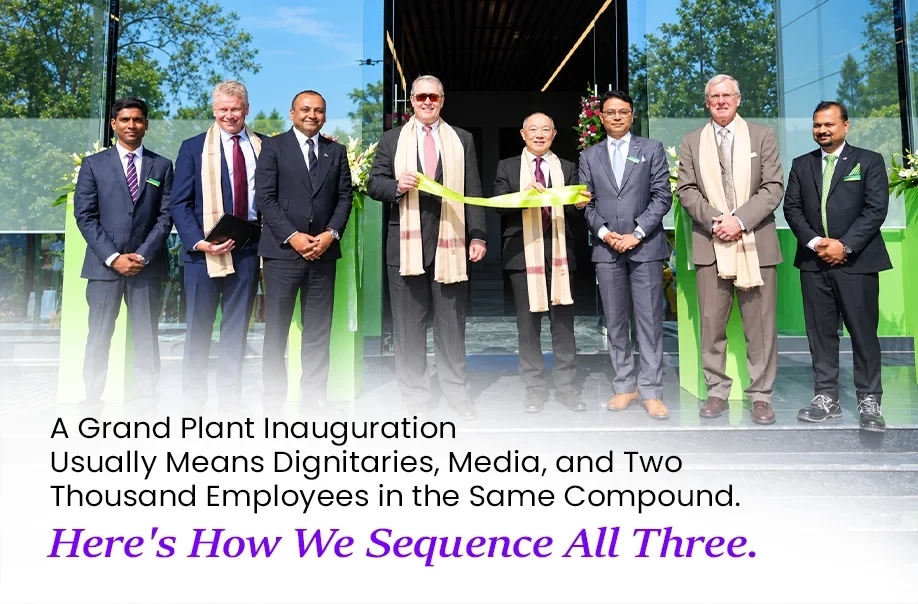
Picture the morning of a grand plant inauguration. A minister's convoy is ten minutes out. Local press is already fixing tripods near the gate. And two thousand employees in freshly ironed uniforms are standing in the sun, wondering where exactly they're supposed to be. That's the real job. Not the ribbon. The sequencing.
At SKIL Events, we've spent 24 years learning that a Grand Plant Inauguration rarely goes wrong because of the big moments. It goes wrong in the gaps between them. So here's how we think about it, in plain words.

A regular plant launch event is mostly internal. A grand one has three audiences, all in the same compound at the same time, and each wants something different.
Plan for only one of them and the other two will make themselves known by lunchtime.
Think of it as hosting three separate parties that happen to share a car park. Once you see it that way, the decisions get simpler. Who arrives first? Who needs shade? Who needs a clear camera angle? Each answer shapes the gate plan, the seating and even where the tents go. We usually sketch this on a single site map before anything else is booked.
Here's the thing most teams miss. Three groups, one gate, trouble. We give each audience its own entry, its own waiting area and its own route to the main stage.
The VIP route :A separate gate, a shaded lounge and one person who walks the guests through. Nobody hunts for parking.
A press zone with a clear view of the ribbon, plus a quiet corner for quick bytes. Reporters are much happier when they aren't fighting for position.
Staggered entry by shift or department. Water, shade and a proper view. Add a couple of screens so the back rows don't feel left out.
Small thing, big effect: label every route with colour-coded signage, so a new driver or a first-time visitor never has to ask.
A good plant inauguration event runs on a clock. We build the schedule in layers: arrival, lamp lighting or puja, ribbon cutting, speeches, plant walk and lunch. Every layer gets a buffer. If the chief guest is fifteen minutes late (it happens more than anyone admits), the buffer absorbs it and nobody in the audience ever sees the panic.
A few rules we stick to:
One more thing about the plant walk. Guests love it, but it's also where timing slips. Keep the route short, assign a guide who knows the machines, and stop at no more than three points. If the minister has fifteen minutes, nobody should spend ten of them in the stores.
It's an industrial site. Heavy machinery, forklifts, hot zones. Guests in sherwanis and heels don't mix well with that. We map safe walking routes, brief the security team and rope off anything out of bounds. It isn't glamorous, but it's the first thing the client's own safety team will check.
Behind every smooth morning is a small crew most guests never notice. We usually place one coordinator at each gate, one with the media, one with the dignitaries and one with the employee blocks, all talking on the same channel. A brief the evening before, with names and phone numbers on a single sheet, saves a lot of shouting. Plant managers also tend to relax when they know exactly who to call, and honestly that calm travels through the whole site.
Sequence the three groups badly, and you get a stage full of dignitaries facing an empty yard because employees are still stuck at the gate. Sequence them well, and the energy builds naturally: employees settle in first, media take their positions next, and dignitaries arrive to a full, welcoming crowd.
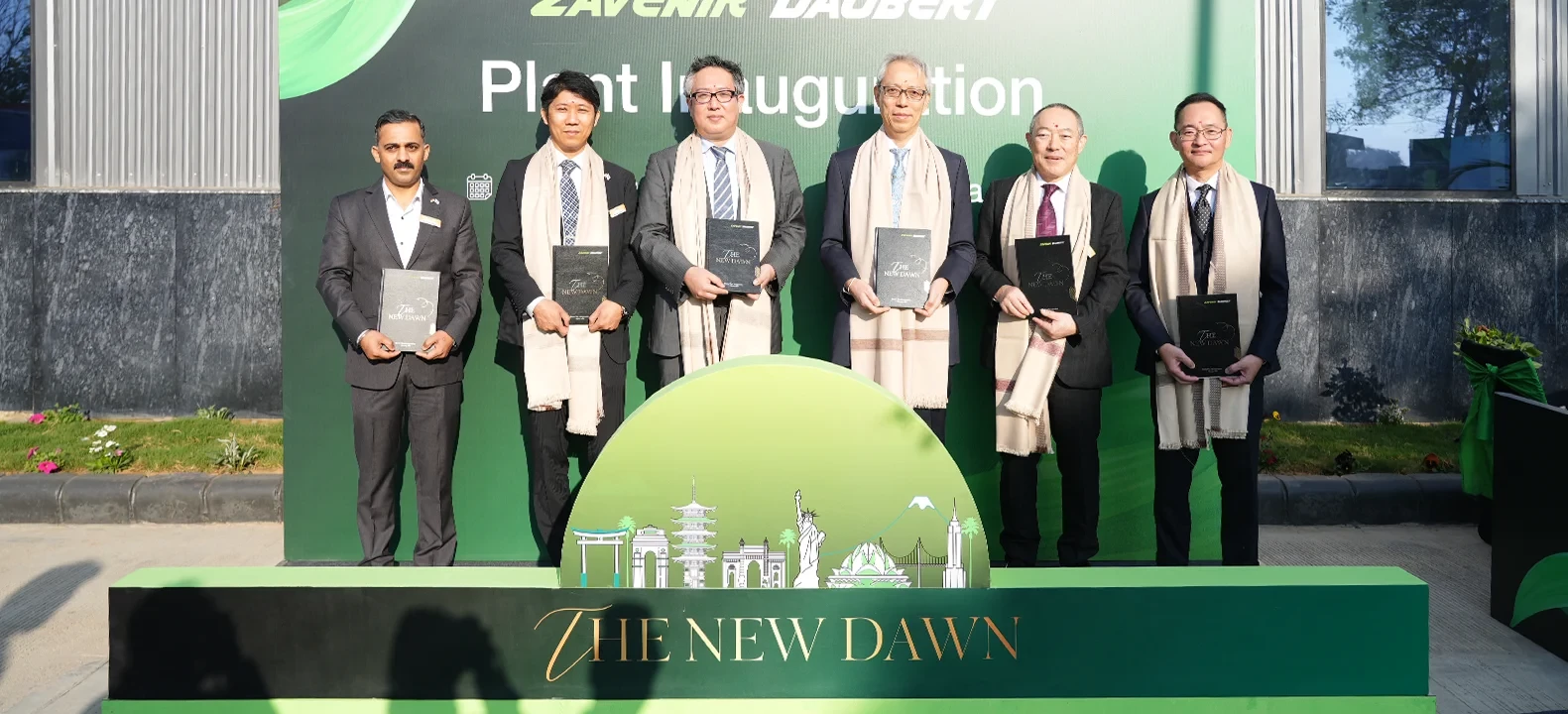
For large facility launches, such as the Burkert plant in Pune, the principle remains the same. The plant is the hero, so every route, entrance, and viewing point should direct attention towards it. SKIL Events focuses on coordinating these details to create a smooth and well-organized plant launch event.
Sound is another important factor. Open compounds can swallow voices, so speakers should be tested from the back of the crowd, not just near the stage. If the last row cannot hear the chief guest, the entire morning feels incomplete.
It also helps to consider what each group will share afterwards. Employees will talk about whether they felt included. Media will report on what was easy to photograph, while dignitaries will remember whether they were welcomed on time. With careful planning and coordination, SKIL Events helps deliver a successful plant launch event that creates a positive experience for every group. That is the real return on thoughtful event planning.
It's a large, public opening of a new factory or plant, usually with dignitaries, media, and employees present together, so it needs far more planning than an internal launch. Think of a mini festival.
Ideally six to eight weeks ahead. Dignitary calendars, permissions, and site safety checks take longer than most teams expect. A longer runway also lets you rehearse once on site.
Government officials, key clients, partners, board members, local media and employees. Each group needs its own entry and seating plan. Do not forget the suppliers and community leaders who helped the plant come up.
Yes. SKIL Events manages concept, guest flow, stage, safety coordination and on-site execution from one team. That includes liaising with local authorities when permissions are needed.
We set up a dedicated press zone with a clear line of sight, a designated spokesperson and safe, marked walking routes. We also brief reporters on what they can and cannot photograph inside the plant.