Let’s be honest about networking for a moment.
Nobody wakes up excited about “networking opportunities.” What people look forward to is meeting someone useful, someone interesting, or someone who makes the room feel less transactional. Everything else is tolerated.
Yet at most corporate events, networking is treated like a compulsory activity. Stand here. Smile there. Exchange cards. Move on.
As a corporate event planner in Delhi, SKIL Events has seen the same pattern repeat across industries. Smart people. Strong intent. Well-produced events. And still, networking that feels oddly unproductive.
The problem isn’t effort. It's the approach.
Networking works when it feels human. It fails when it feels performative. And the difference usually comes down to a few small behaviours that seasoned corporate event planners notice immediately.
Let’s break them down. Three dos. Three don’ts. Nothing theoretical.
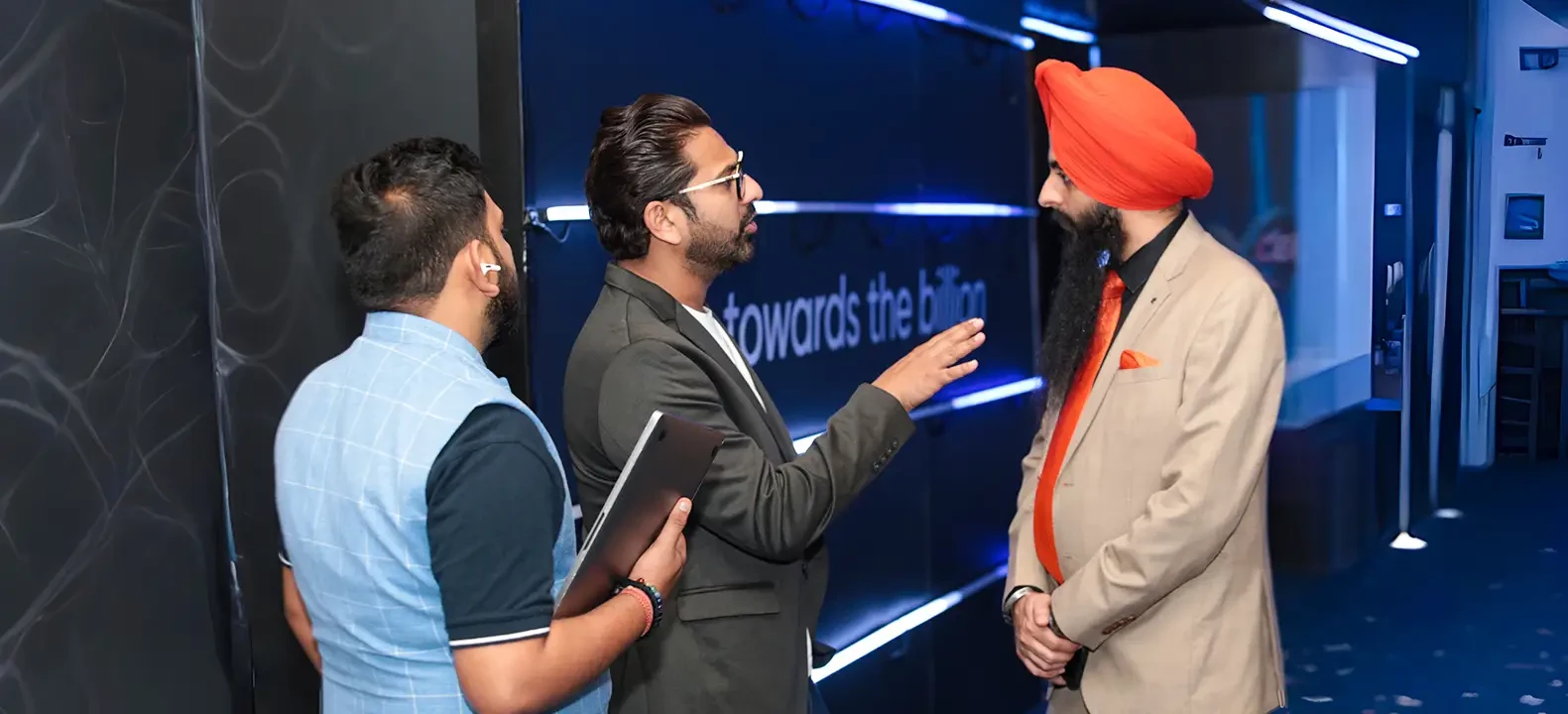

Curiosity is good. Intent is better.
Most attendees enter networking spaces with vague goals. “Let’s see who I meet.” That sounds open-minded, but it often leads to shallow conversations and missed opportunities.
Intent doesn’t mean walking in with a pitch rehearsed. It means having a rough sense of:
According to insights shared by Harvard Business Review, professionals who approach networking with a clear interaction goal are significantly more likely to convert initial conversations into follow-ups.
As a corporate event planner in Delhi, we often encourage pre-event reflection. When people arrive knowing what they’re looking for, networking stops feeling random and starts feeling purposeful.
This is the most common trap.
Talk to everyone. Cover the room. Collect cards. Connect later.
It looks productive. It isn’t.
Data referenced by McKinsey & Company suggests that professionals who focus on fewer, deeper conversations report higher long-term value from events compared to those who maximise surface-level interactions.
Three meaningful conversations will outperform thirty forgettable ones every time.
Experienced corporate event planners design environments that slow people down for a reason. Seating clusters instead of endless standing zones. Lounges instead of loud corners. Because depth needs space.
If you feel the urge to rush, pause. Good conversations are rare. Don’t outrun them.
Here’s a tough one.
Most people don’t listen at networking events. They wait.
They wait for a pause so they can jump in with their role, their company, their achievements. And the other person can feel that impatience instantly.
Research from Deloitte shows that active listening is one of the strongest predictors of trust in professional interactions. Not charisma. Not confidence. Listening.
Good listening looks like:
From the perspective of a corporate event planner in Delhi, the best networkers aren’t the loudest. They’re the ones others seek out later because the conversation felt real.
This question isn’t offensive. It’s just unimaginative.
It forces people into elevator-pitch mode immediately. Titles come out. Context disappears.
Better openers create space:
Insights from Forbes Business Council suggest that context-based openers lead to longer, more engaging conversations than role-based questions.
Many corporate event planning tips focus on flow and logistics. Conversation design matters just as much. How people start talking often determines whether they’ll want to continue later.
This is where networking efforts usually collapse.
Generic LinkedIn requests.
Copy-paste emails.
Messages that say “Great connection!” and nothing else.
According to data from HubSpot, personalised follow-ups see response rates over 40% higher than generic outreach.
A good follow-up does three things:
As corporate event planners, we often remind clients that networking doesn’t end when the event does. It ends when the conversation either moves forward or fades honestly.
Follow-up is not about speed. It’s about relevance.
If someone has just met you, they’re not ready for a pitch.
They’re forming a read. On you. On your tone. On whether future conversations feel safe or exhausting.
Research from Gartner shows that buyers disengage faster when they feel pressured before trust is established.
Strong networkers share enough to be interesting, not everything to be impressive.
Many professionals active in a corporate event planners association will tell you the same thing. Relationships that last usually start with restraint.
Let curiosity work first. Opportunity follows later.
From the organiser’s side, networking often fails because environments aren’t designed for it.
Insights from the Event Industry Council show that well-designed networking formats significantly improve attendee satisfaction and perceived ROI.
SKIL Events treat networking as an experience, not a filler between sessions. Lighting, seating, pacing, and even music volume influence how willing people are to stay and talk.
Comfort isn’t a luxury. It’s a requirement for connection.
Networking doesn’t happen by accident.
Good corporate event planners don’t just curate guest lists. They shape interaction.
That includes:
This is why conversations around corporate event planning tips have evolved. It’s no longer just about stages and speakers. It’s about behaviour.
And behaviour responds to design.
Networking doesn’t have to feel awkward or exhausting.
When it works, it feels surprisingly easy.
Three principles make most of the difference:
The rest is noise.
And whether you’re attending or planning as a corporate event planner in Delhi, remember this: people don’t remember how many conversations they had.
They remember how a few conversations made them feel.