You've seen the moment it goes wrong. A delegate walks up to the registration desk, their badge isn't printed, the queue behind them is now eight people deep, and the keynote is starting in eleven minutes. Nobody remembers the brilliant keynote from that conference. Everybody remembers the queue. That's the strange truth about sales conferences and exhibitions: the parts that determine whether people call the event a success are rarely the parts on stage.
Getting a conference or exhibition "delegate-ready" means everything a guest touches, sees, or waits in line for has been thought through before they arrive, not fixed on the fly while they're standing there. It sounds obvious. It's shockingly easy to get wrong at scale, and it's one of the areas where SKIL Events spends the most planning energy, because it's also the area clients notice least when it works and most when it doesn't.
Registration is the first data point a delegate has about how organized your event is. A smooth badge pickup, a clear signage trail to the hall, water and seating that doesn't require a scavenger hunt, these set the tone before a single speaker says a word. For large sales conferences with hundreds or thousands of delegates arriving in a tight window, registration desk count, queue management, and badge printing speed aren't small details; they're the first test of the whole operation.
Exhibitions add a second layer entirely: booth logistics. Vendors and sponsors need power, connectivity, furniture, and signage delivered on time and to spec, and every booth that isn't ready when doors open reflects on the organizer, not the exhibitor. Then there's crowd flow. Where do people naturally bottleneck? Is there a clear path from registration to the main hall to the exhibition floor without everyone crossing paths at once? Getting this wrong doesn't just annoy delegates; it actively slows down the event and eats into the schedule.
India's exhibition and conference sector has genuinely matured over the last few years. Better convention infrastructure in cities like Mumbai, Bangalore, and Delhi NCR, combined with growing corporate demand, has pushed the broader events market toward double-digit annual growth, and companies hosting sales conferences are increasingly expected to deliver an experience that matches international standards, not just a rented hall with a projector.
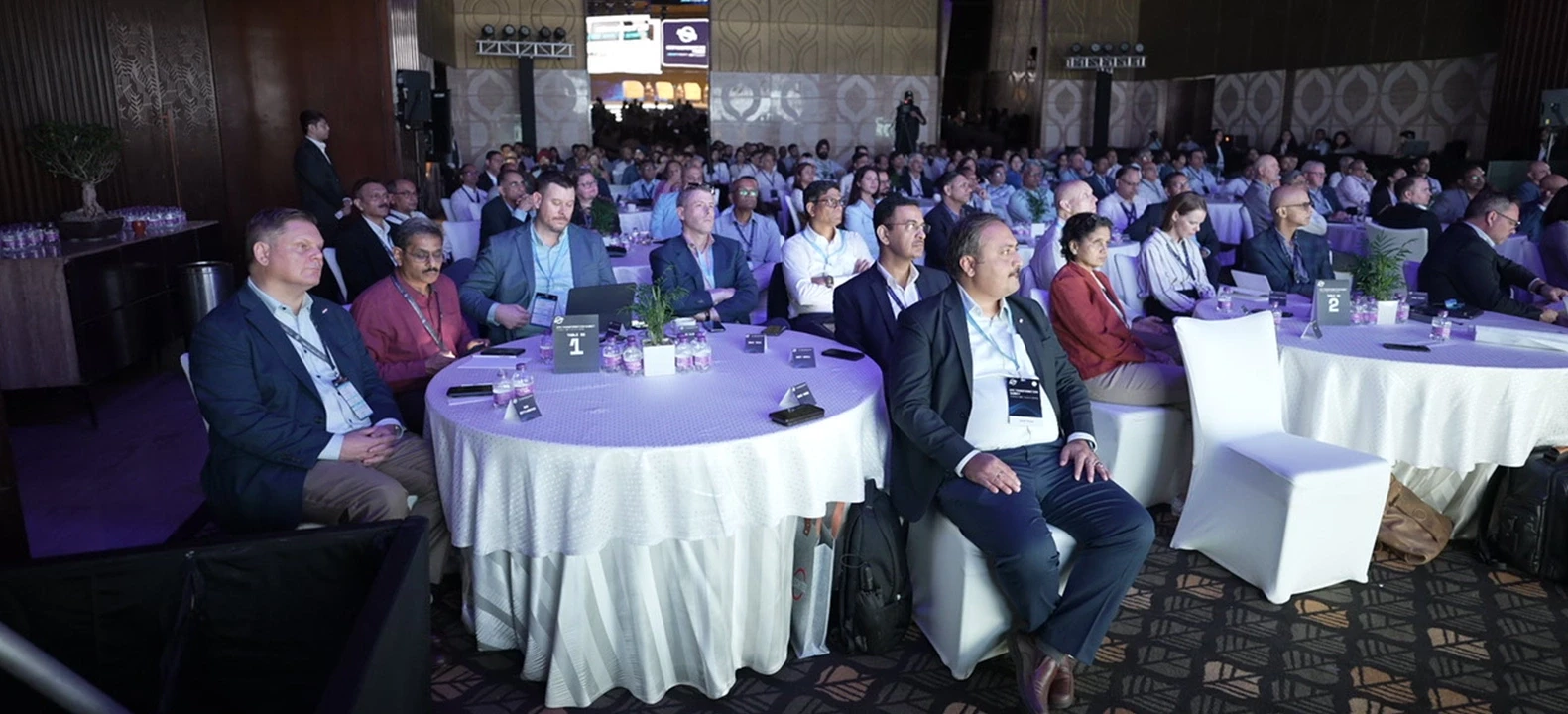

Once delegates are actually seated, the job shifts to keeping them engaged without the production getting in the way of the content. Sales conferences in particular tend to be content-heavy: multiple speaker sessions, breakout tracks, award segments, maybe a product reveal woven in. Pacing matters enormously here. A stage that never varies its rhythm, one keynote after another with no break in energy, loses a room by lunch, no matter how good the individual speakers are.
Good production means the AV, lighting, and staging are invisible when they should be and impactful when they need to be. It means transitions between segments are tight enough that delegates don't feel the dead air while a mic gets swapped or a slide deck loads. And it means having a backup for everything: a second laptop cued up, a spare handheld mic, a technician who isn't also trying to run the follow spot at the same time.
Here's a bullet-point breakdown of what tends to separate a smoothly delivered conference from a rocky one:
As one of the corporate event production companies handling this scale regularly, SKIL Events has built its floor-to-stage process around exactly these fundamentals, informed by running roughly 1,500 events a year across five Indian cities. When you've managed registration for a 2,500-attendee flagship event, like the debut Startup School India program SKIL Events delivered for Y Combinator in Bengaluru, complete with VIP hospitality and over 2,200 branded welcome items handed out to attendees, you've already solved most of the floor-level problems that trip up first-time organizers.
"Clients almost always brief us on the stage experience first, the keynote, the branding, the big reveal. But the floor experience is what determines whether delegates are in a good mood by the time they sit down to watch it," says a member of the SKIL Events production team. That's a genuinely underrated point. A frustrated, queue-weary delegate isn't going to give a keynote a fair hearing, no matter how good it is.
If you're planning a conference or exhibition and want to stress-test how delegate-ready it really is, walk the floor plan yourself, on paper or in person, and time the worst-case scenario. How long would registration take if 40% of delegates arrived in the same fifteen-minute window? Is there a clear sightline from every seat to the stage? Does every exhibitor booth have power and connectivity confirmed in writing, not just promised verbally? And is there one person, not a committee, empowered to make quick calls if something starts running behind?
None of this is about eliminating risk entirely, that's not realistic at scale. It's about making sure the inevitable small hiccups (a late shipment, a delayed flight, a technical glitch) get absorbed quietly instead of becoming the story of the day. That's the standard SKIL Events works to on every mice events program, whether it's an 80-person leadership meet or a 2,500-person flagship conference.
It means every touchpoint a delegate experiences, registration, signage, seating, booth access, has been planned and tested in advance rather than improvised on the day. The goal is that delegates never have to think about logistics because the logistics were handled before they arrived.
Ideally several days before the event, with a full dry run simulating peak arrival volumes. Testing badge printing speed and queue flow only on the morning of the event is one of the most common causes of opening-hour chaos.
The floor is about flow and logistics for large numbers of people moving through a space, while the stage is about pacing and production for a seated, captive audience. Both require different skill sets, and a good corporate event production partner staffs for both separately rather than stretching one team across everything.
Through dedicated floor teams, tested registration systems, and staffing ratios calibrated to expected arrival patterns, drawn from experience running large-format programs including a 2,500-attendee flagship event for Y Combinator's Startup School India. The focus is on absorbing small issues before delegates ever notice them.
Power, connectivity, and furniture delivered to spec and confirmed before doors open, clear signage directing footfall toward their booth, and an organizer team that's reachable quickly if something needs fixing during show hours. A poorly managed floor affects exhibitor experience just as much as delegate experience.