A quick note before we get into this one. What follows is an illustrative scenario, the kind of brief SKIL Events fields regularly, walked through in detail so you can see how the thinking actually works. It isn't a verified named case study with published dates and figures. Think of it as "here's how we'd approach this," built from real patterns across real engagements, including our work on hybrid programs spanning multiple countries.
So let's set the scene. A founder based in Dubai wants to address the entire company on Founder's Day. Half the leadership team is physically in the room in Mumbai. Another 1100-plus employees are logging in virtually from offices across India and abroad, some in the Gulf, some in Southeast Asia. There's a live product reveal, a fireside chat, and a segment where regional teams get called out on stage via video link. On paper, it's a single event. In practice, it's three or four events happening at once, and if any one of them lags by even a few seconds, the whole thing feels disjointed. This is what international mice events look like when they're done properly, and it's a genuinely different discipline from running a single-venue party.
Anyone who's sat through a badly-run hybrid town hall knows the symptoms. Audio that echoes. A five-second lag between the Dubai stage and the Mumbai screen. A remote employee trying to ask a question and getting cut off mid-sentence. None of that is really a technology problem, even though it looks like one. It's a planning problem that shows up as a technology problem.
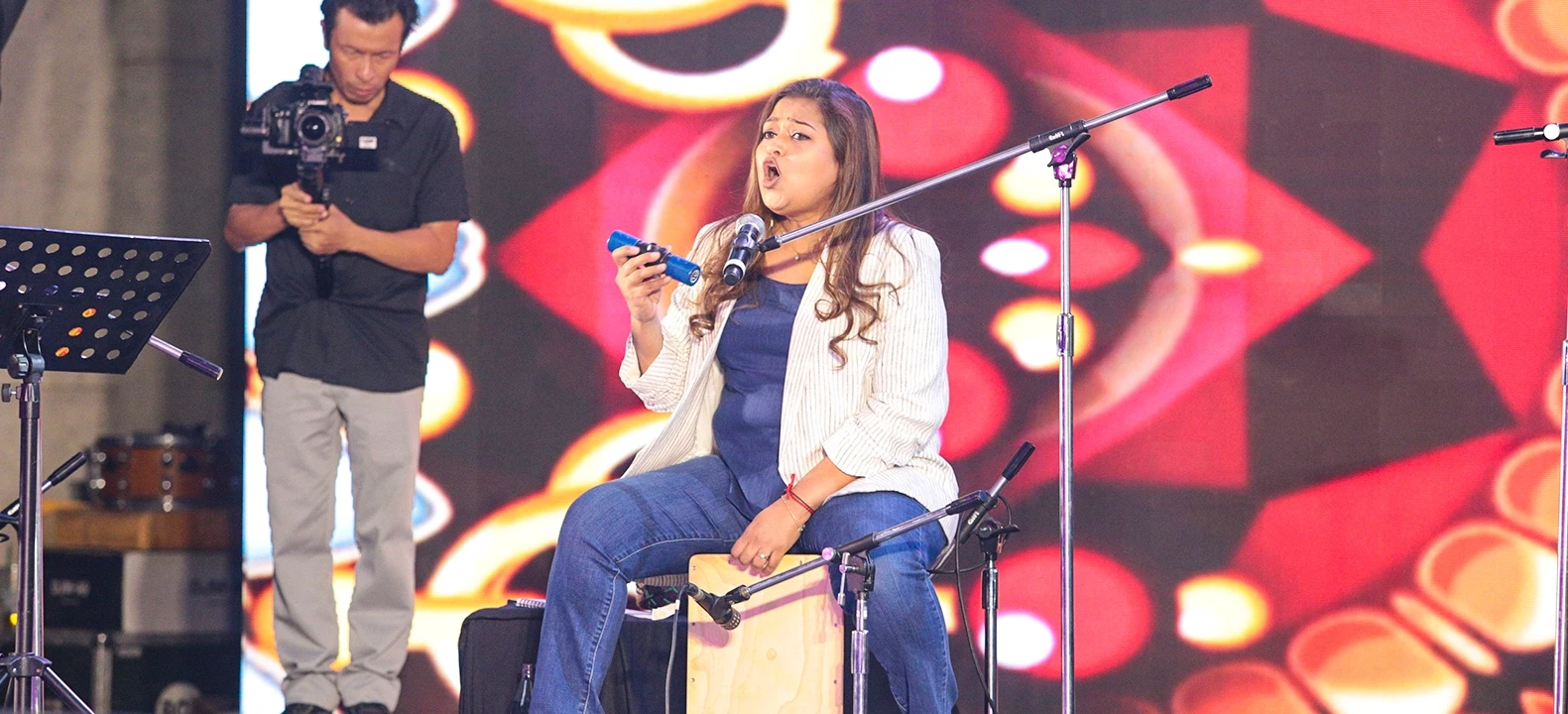
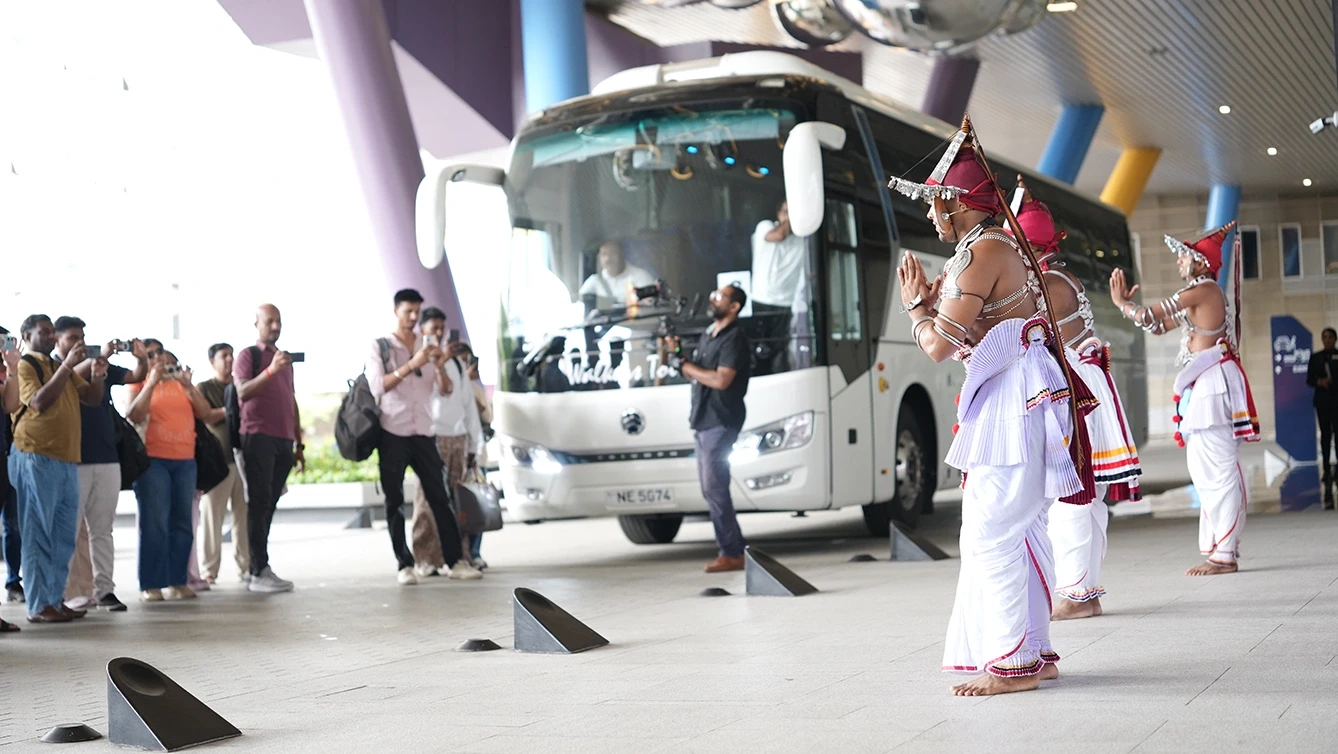
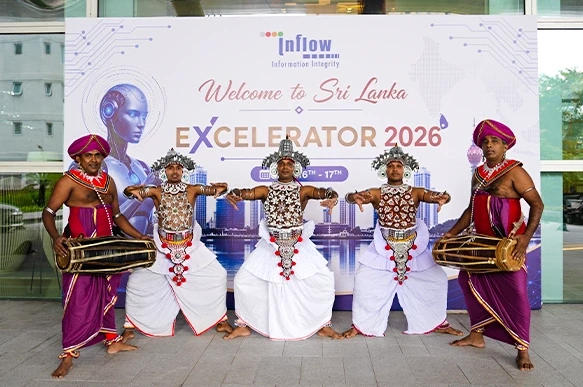
SKIL Events has run programs that stretch across multiple countries, including a hybrid engagement spanning 16 countries with over 1,100 participants for a Dubai-based founder's business, and international sales meets for clients like Inflow, which has taken us to Colombo and Kathmandu for large-format annual gatherings. What those programs have in common is that the hard part isn't any single location. It's the handoffs between locations, and the time zones, and the fact that a decision made in one city needs to be communicated to a production team in another city within minutes, not hours.

For a Founder's Day format like the one above, here's roughly how the planning stack would break down:
That third point is where a lot of programs quietly fall apart. Companies without on-ground teams in multiple cities end up coordinating everything remotely, and remote coordination during a live broadcast is a recipe for the kind of small delay that becomes a very visible glitch on screen.
Dubai has become a genuinely common node in Indian corporate calendars, and not just for glamour. It's a time-zone-friendly midpoint for companies with founders, investors, or regional leadership based in the Gulf, and it's increasingly treated as a serious mice destination for India-headquartered companies with international ambitions. The infrastructure is mature, the connectivity is excellent, and a lot of Indian corporates already have some presence there, which makes the logistics of getting senior stakeholders in the room considerably easier than flying everyone to a less-connected city.
For a company running a founder-led broadcast, the mice business calculus usually comes down to this: where does the founder physically need to be, where does the majority of the audience sit, and where can the production team get reliable infrastructure without needing three separate customs clearances for equipment. Dubai often wins that calculation for India-facing companies with a Gulf-based leadership presence.
"The biggest misconception clients have going into a multi-country hybrid event is that it's mostly a tech problem. It's actually mostly a timing and ownership problem, who owns the run of show in each city, who has the authority to make a call in the moment if something slips," says a member of the SKIL Events production team. Get that ownership map wrong and even the best AV setup in the world won't save the broadcast.
Working from the Ideation to Execution model, a program like this would start with genuinely understanding what the founder wants the moment to achieve, not just "broadcast a speech" but something like "make 1100 remote employees feel like they were in the room." That objective shapes everything downstream: whether there's a live chat wall so remote attendees can react in real time, whether regional offices get their own on-screen shoutout, whether there's a physical gift or kit mailed to remote employees so they feel included rather than just watching from a laptop (SKIL Events has handled branded kit distribution at this kind of scale before, including thousands of custom items for a single flagship program).
From there it's concept and design (how the stage, the branding, and the virtual platform all speak the same visual language), execution (the actual broadcast day, staffed properly in every city involved), and post-event follow-up, because a founder's day that ends the moment the stream cuts off is a missed opportunity. Highlight reels, employee feedback, and a wrap report all matter more for this format than for a standard in-person event, since so much of the audience never physically walked into a room.
If you're weighing a multi-city or multi-country broadcast event, the questions worth asking any corporate event management partner are blunt ones. Have they run a live cross-border feed before, or is this their first attempt? Do they have people physically present in every city involved, or are they coordinating blind? And do they treat the remote audience as a full audience, with their own experience design, rather than people watching a livestream as an afterthought? Get those answers right and a Founder's Day spanning continents can feel seamless. Get them wrong and everyone remembers the lag, not the message.
International MICE events involve cross-border logistics, multiple time zones, and often multiple production teams working in sync. The core challenge isn't usually the content, it's coordination: making sure every location, every feed, and every handoff works as one seamless experience for the audience.
Dubai offers strong infrastructure, excellent connectivity, and a time zone that works well for both Indian and Gulf-based stakeholders. Many Indian corporates already have a business presence there, which simplifies logistics considerably compared to less-connected international cities.
The approach centers on treating the virtual audience as seriously as the in-room audience, with dedicated broadcast infrastructure, rehearsed cutaways, and local production support in every originating city. SKIL Events has managed hybrid programs spanning multiple countries and over a thousand participants using this model.
Latency and ownership gaps. A few seconds of lag or an unclear chain of command for last-minute decisions can visibly derail a live program. Having dedicated teams and clear escalation paths in each city is what prevents this.
It's written as an illustrative composite scenario based on the kind of multi-country, hybrid programs SKIL Events regularly handles, including real engagements spanning multiple countries and over a thousand attendees. It's meant to show our planning approach rather than cite one specific, publicly documented event.