Not every company can pull a hundred people out for a two-day offsite every quarter, and honestly, not every team needs to. Deadlines don't pause, delivery cycles don't wait, and flying a distributed team to a resort four times a year isn't realistic for most budgets. That's exactly the gap Corporate Bonding activities on-campus are meant to fill, real connection, built without taking anyone away from their actual work for more than a couple of hours.
In our experience at SKIL Events, most in-office bonding attempts default to the same tired format: a games afternoon in the cafeteria that half the floor skips because they're mid-deadline. Getting this right on-campus takes more intention than that, not more budget.

Take people to a resort for two days and bonding happens almost by default, shared meals, shared downtime, nobody checking Slack every ten minutes. On your own campus, all those natural bonding triggers are missing.
People are still one email away from their desk, still mentally half in work mode, and still aware their manager might walk past at any moment. Designing genuine connection under those conditions needs a sharper format, not a longer one.
A ninety-minute session with a clear start and end time gets significantly higher participation than an "afternoon of fun" with no defined boundary. People can commit to ninety minutes without anxiety about what's piling up at their desk. Open-ended sessions quietly bleed attendance as people slip back to work.
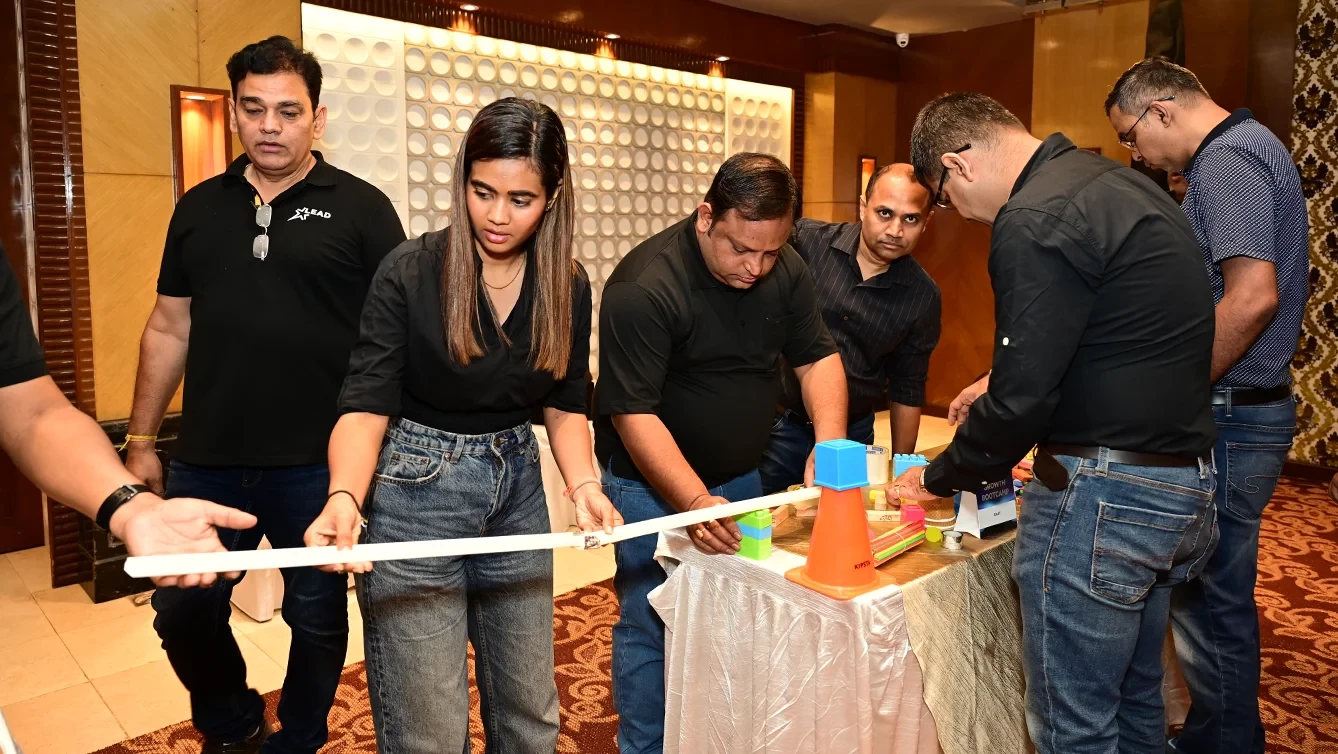
Cross-functional groups of six to eight, working on a shared light challenge, whether that's a quick problem-solving activity, a creative brief, or a friendly competition, build far more actual connection than a hundred people watching one big-screen quiz. The goal is conversation, not spectacle.
Sessions with a clear hook, an innovation challenge, a culture-and-values exercise, a light skills-swap between departments, consistently outperform generic "team fun" afternoons, because people show up curious rather than obligated.
What works in an open-plan Bangalore tech campus won't necessarily work on a floor with client-facing desks or an active trading room. This is where genuine Event Planning experience matters, understanding your specific floor's constraints before designing the activity, not after booking a vendor.
We've run on-campus bonding sessions across Bangalore, Chandigarh, and several other India tech hubs, and the honest truth is the format needs local calibration. Corporate Team Activities in Bangalore tech campuses, for instance, tend to work best in shorter, high-energy bursts given how packed most delivery calendars are.
In contrast, some Chandigarh corporate parks, where team sizes per floor tend to be smaller, respond better to slightly longer, more conversational formats. There's real value in pairing this thinking with broader Employee Engagement in Chandigarh planning, so bonding sessions don't exist in isolation from the rest of your engagement calendar.
Here's an underrated factor: on-campus bonding sessions fail more often because managers don't visibly protect the time than because the activity itself was poorly designed. If a manager pulls someone out mid-session for "just five minutes," that signals to the whole team the session doesn't actually matter. Getting explicit manager buy-in and calendar-blocking before the session, not just HR sign-off, meaningfully changes attendance and energy in the room.
Most companies skip measurement entirely for on-campus bonding, treating it as a soft, unmeasurable nice-to-have. A short, honest pulse survey sent within 48 hours, three or four quick questions on whether people felt more connected to colleagues outside their immediate team, is enough to tell you whether the format is landing or just filling a calendar slot. Track this over two or three sessions and patterns emerge fast: which formats people actually talk about afterward, and which ones get forgotten by the following week.
It's also worth tracking a simple attendance-versus-invited ratio over time. A declining ratio quarter over quarter is usually the clearest early signal that a format has gone stale and needs a genuine refresh, not just a new theme applied to the same tired structure.
When we design Corporate Bonding sessions for on-campus delivery, we start by walking the actual floor, not just reviewing a floor plan, to understand noise levels, available space, and workflow patterns specific to that team. That's the difference between an activity that feels bolted onto a normal workday and one that genuinely gives people a real, if brief, reset.
Effective Corporate Bonding on-campus doesn't require taking employees away from work for an entire day. With focused formats, clear timing, manager support, and thoughtful Event Planning, teams can build genuine connections without disrupting productivity
60 to 90 minutes tends to work best. Longer, open-ended sessions usually see attendance quietly drop as people drift back to their desks.
Yes, but the format needs to be adapted, smaller breakout groups, quieter activity types, and careful scheduling around client-facing hours, rather than a loud, large-group format.
Without a clear theme or hook, people show up out of obligation rather than curiosity, and attendance tends to be inconsistent as work pressures pull people away.
Very. If managers don't visibly protect the time, by not pulling people out mid-session, it signals the activity isn't a real priority, which directly affects engagement and turnout.
Yes, based on our experience across Bangalore, Chandigarh, and other hubs, delivery pace, floor layout, and team size all shape what format actually works best on a given campus.