Okay, real talk for a second. If your company mandated a return to office this year and got a wave of quiet resentment instead of relief, you are not alone. 2026 has turned into the year employees stopped pretending they are fine with it. Badge swipe data goes up, morale surveys go down, and somewhere in between HR teams are scrambling to figure out how to make the office feel like somewhere people actually want to be, not just somewhere they are told to show up.
This is exactly why the question keeps landing on event planners' desks: what corporate team building activities work best for remote, hybrid, and in-person teams in 2026? Because here is the thing nobody wants to say out loud in a leadership meeting, mandates do not build culture. Shared experiences do. And most companies are only now realizing the gap between the two.
Pre pandemic team building meant an annual offsite, maybe a Friday happy hour, some trust falls if your company was feeling particularly nostalgic for 2012. That playbook assumed everyone was already physically together most of the time, so the "bonding" activities were more like seasoning than the main dish. Post pandemic, with hybrid schedules scattered across the week, teams are not accumulating the small daily interactions that used to build trust automatically. A person who joined in 2022 might have never actually met half their team in person. That is a real structural problem, not a motivation problem, and no amount of mandatory Tuesday attendance fixes it on its own.
The events landing well in 2026 share one trait, they are designed around connection first and agenda second. Cross functional mixers where people from different departments are forced into small group problem solving (not icebreaker games, actual light work problems) tend to build more genuine rapport than a scavenger hunt ever did. Companies running quarterly in office days built around a specific shared goal, a hackathon, a strategy workshop, a customer story session, are seeing better attendance and better sentiment than plain "come to the office" mandates.
Corporate team building in Bangalore has particularly leaned into this shift, given how many tech and services teams there run hybrid by default. Rather than fighting the hybrid reality, the better run programs build events specifically for the days people are already planning to be in, stacking meaning onto days that were going to happen anyway instead of adding new mandatory ones.
If you are running Corporate Team Building Events in Chandigarh alongside a Bangalore or Mumbai office, do not assume the same format lands the same way. Smaller city teams often have tighter existing social networks (shorter commutes, more overlap outside work) which changes what "connection building" even needs to solve for. A program built to fix isolation in a sprawling metro can feel redundant, even patronizing, in a market where people already know each other's families. Good planners ask about this before proposing a format, not after.

A common mistake is trying to make one event serve remote and in-person people equally through a video call bolted onto a physical room. It rarely works. The remote person watches, does not participate, and quietly disengages further, which is the opposite of the goal. The events that actually address hybrid teams well tend to run smaller, more frequent touchpoints designed natively for video (short structured working sessions, virtual show and tells) separately from the big in person moments, rather than trying to force one format to do both jobs.
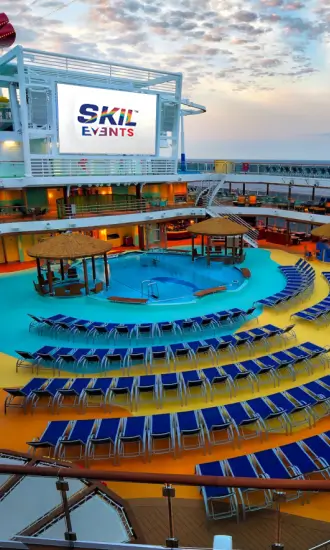
This is also where corporate events for team building earn real budget justification. Leadership is far more willing to fund a well-designed quarterly program with a track record of improving retention numbers than a vague annual "culture day" nobody can measure. SKIL Events has built recurring team-building programs for corporate clients specifically around this measurement gap, treating each session as a data point rather than a one-off morale boost, tracking attendance sentiment and post-event pulse surveys the same way a marketing team tracks a campaign.
The best programs we have seen in 2026 combine three things. A clear non-work reason for people to be in the same room (not just "team building," an actual activity with a beginning and end). Enough structure that introverts are not left awkwardly hovering near the snack table. And a repeat cadence, quarterly beats annual every time, because trust compounds with frequency, not intensity.
If your company is fighting the return-to-office backlash right now, the honest answer is that no single event fixes it. But a well-designed, recurring program that treats culture as something you build deliberately, not something that happens automatically because people are in a building, genuinely moves the needle. The mandate gets people in the door. The event is what gets them to actually want to be there.
Small, native to video formats for remote inclusion (short working sessions, structured show-and-tells) combined with separate, larger in-person moments tend to outperform a single event trying to serve both groups at once.
Quarterly cadence generally outperforms a single annual event, since trust and familiarity compound with repeated smaller touchpoints rather than one big yearly push.
Often yes. Tech-heavy hybrid teams in Bangalore usually need programs built around the specific days people are already coming in, rather than adding new mandatory attendance days on top of existing schedules.
Smaller city teams frequently already have tighter social networks outside work, so the same isolation-focused format used in a big metro can feel unnecessary. Local context should shape the program design.
Post event pulse surveys tracked over time, alongside attendance sentiment and retention data, give a clearer picture than one off feedback forms, treating team building more like a measurable program than a single feel good day.