Genuine question. Do you actually know what happens between "yes, let's do this event" and the moment guests walk in and everything looks magically perfect? Because most people don't. And that's kind of the point, honestly. The best event production is invisible. But someone should explain what's behind the curtain so the next time you're budgeting, you understand what you're paying for. Spoiler - it's way more than booking a venue and ordering lunch.
SKIL Events has been doing this long enough to know that the behind-the-scenes reality of a corporate event management company is wildly different from what clients picture.

Weeks before any event, there's a phase that's pure strategy. Audience profiling. Venue shortlisting based on actual capacity, not inflated website numbers. Budget architecture where every rupee gets a job. Vendor negotiations are going back and forth for days over lighting specs alone. Timeline documents breaking things down to fifteen-minute blocks.
Not glamorous at all. Spreadsheets and calls and site visits and backup plans for backup plans. But skip this, and the event falls apart in ways nobody can fix day-of. A corporate event planner earns most of their fee during this phase. Not on event day. The event day is the final exam. The studying happened weeks ago.
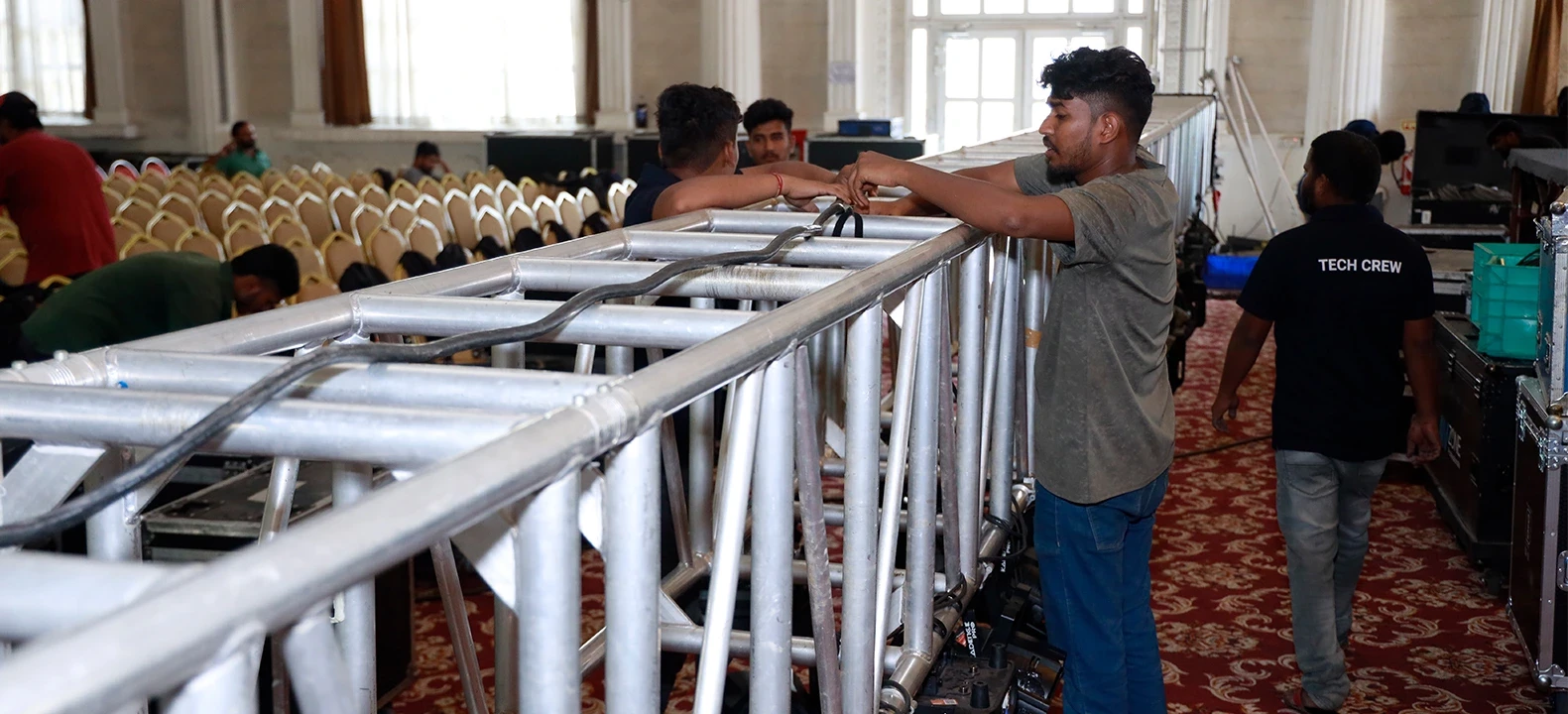
Something clients never fully grasp. A mid-size event involves fifteen to twenty vendors. AV. Caterer. Florist. Photographer. Staging crew. Security. Registration tech. Transport. Each operates on its own timeline, has its own crew, needs its own space, and will absolutely conflict if nobody manages the traffic.
SKIL Events runs detailed load-in schedules. Who arrives when? Which entrance. Where do they park? What happens if they're late? Reads like an airport operations manual. But without it, you get the AV team and caterer fighting over the service elevator at 7 AM while your event starts at 9. Ask us how we know.
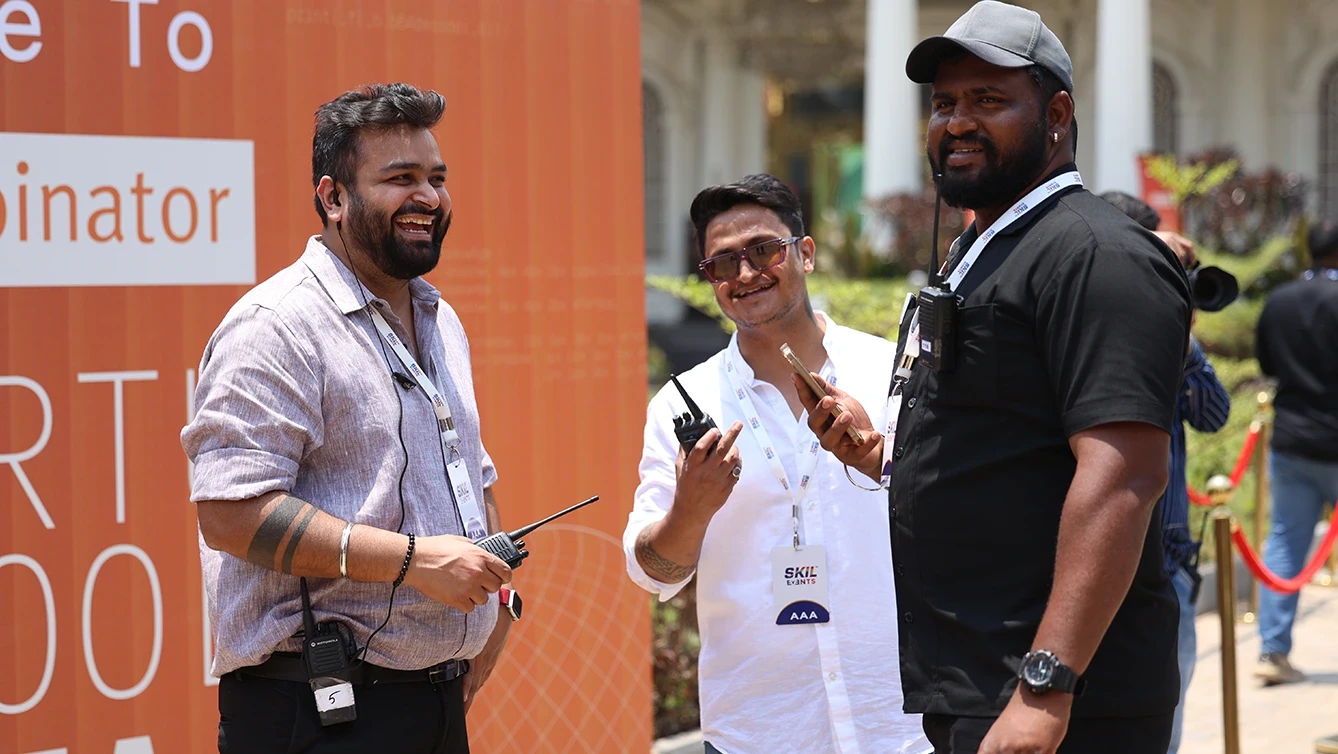
To really explain what a corporate event management company does, let's talk about something real. SKIL Events produced Y Combinator's Startup School India in Bengaluru. When YC decided to host their first physical event in India in twenty years, it had to be flawless. 2,500 attendees. Silicon Valley partners flying in from San Francisco. Founders of Zepto, Razorpay, Meesho, and Groww on stage. National media everywhere. Acceptance rate of 1-2%. Every person in that room felt like they'd earned their seat.
From the audience side? Amazing speakers, packed energy, smooth flow. What didn't they see? Entry management for 2,500 hand-picked attendees arriving within a ninety-minute window without a single bottleneck. Stage transitions were choreographed to the second because of one AV delay during a keynote, and headlines flipped from "YC comes to India" to something nobody wants. Emergency response teams are running crowd surge protocols silently. Medical support on standby. Exit flow management so 2,500 people don't turn a hallway into a stampede situation.
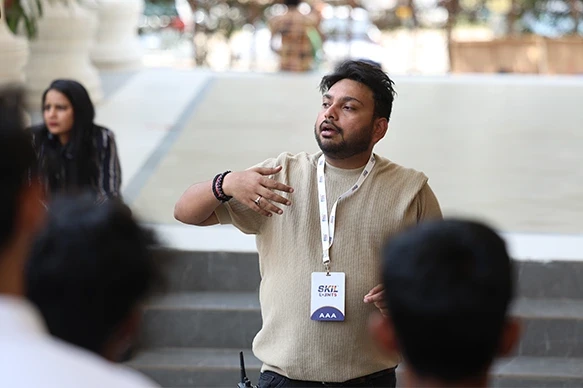
Fourteen-year-olds sitting next to unicorn founders. Backpacks everywhere. Elevator pitches are happening in hallways. The energy was intense in a way corporate events rarely are. SKIL's job? Contain that intensity without killing it. Let it feel exciting while keeping it controlled underneath. That balance is what corporate events companies actually do behind the scenes. Make controlled chaos look like magic.
When clients ask for team building, they imagine the fun part. Games. Laughter. Photos. What they don't see is programming designed two weeks earlier.
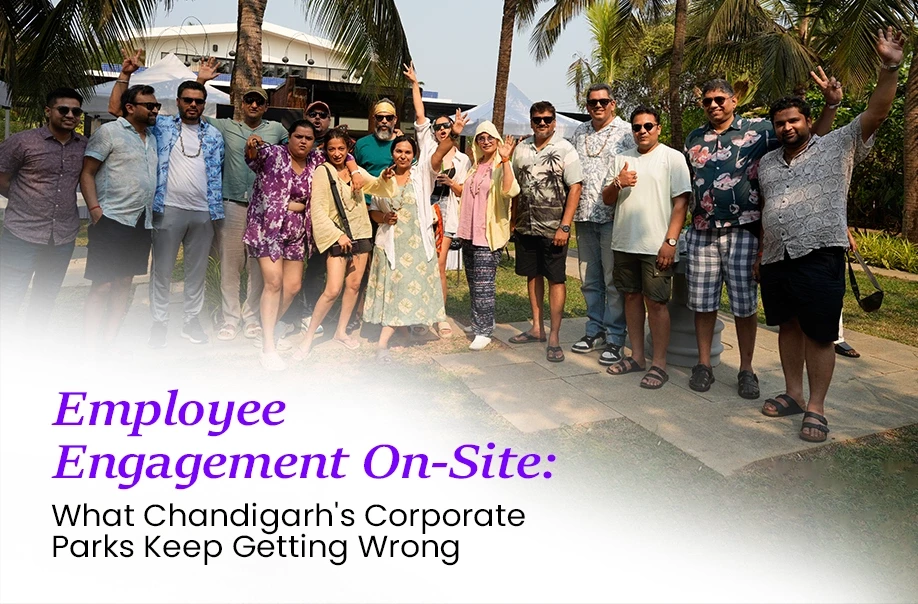
SKIL Events builds Squad Games where challenge structures target specific team dynamics discussed with HR beforehand. Which departments don't collaborate? Force them to. Which leaders need informal visibility? Put them where titles don't matter. Geo Hunt Olympics look like a fun city treasure hunt, but clue design, route planning, safety logistics, and real-time scoring take weeks. Drum Circles feel spontaneous, but facilitator briefing, instrument logistics, and group psychology sequencing are all engineered carefully.
The activity is the tip. The iceberg underneath is corporate events planning companies doing invisible work, so the visible part feels effortless.
Event day runs on comms. Walkie-talkies, WhatsApp war rooms, zone leads. Something will go wrong. The question is never if. It's what and when.
The speaker's flight is delayed. Backup plan activates before the client even knows. The projector in breakout room 3 flickers. Someone's already swapping the cable while the facilitator buys sixty seconds with an icebreaker. The lunch queue is building too fast. A second station opens that was always planned but held in reserve for exactly this moment.
SKIL Events runs event-day ops like a live broadcast. Every person has a role. Every role has a contingency. The client sees a smooth event. We see a hundred small fires put out before anyone smelled smoke.
Not a venue booking. Not a caterer referral. Not a pretty stage. You're paying for thousands of micro-decisions between the brief and the event that determine whether your 50-person offsite or your 2,500-person flagship feels intentional or improvised. A corporate event planner who knows their craft makes the complex look simple. That simplicity is the product.
SKIL Events has always believed the best compliment after an event isn't "the production was incredible." It's "everything just worked." Because that means nobody saw the machinery. And that's exactly how it's supposed to be, honestly.
Vendor coordination at scale, real-time crisis management, production expertise from hundreds of events, and contingency systems. A corporate event management company brings operational muscle that internal teams building events between their regular work simply can't match.
Once you're past 100 attendees or dealing with multiple vendors, AV production, or VIP protocols. A good corporate event planner pays for itself through coordination efficiency and risk prevention alone.
Zone-based teams, military-grade load-in schedules, emergency response protocols, and real-time comms systems. At this scale, corporate events companies operate more like broadcast producers than party planners.
Average ones execute your brief. Excellent corporate events planning companies challenge it, build invisible contingencies, and make controlled chaos look effortless. The difference shows in what doesn't go wrong, not what does.
Eight to twelve weeks for mid-size. Sixteen-plus for flagship or large-format events. The invisible planning phase is where real value gets created.