You send the brief. Then what? Most companies never actually find out. They get a proposal deck, a few calls, maybe a site visit photo on WhatsApp, and then the event just happens. If it goes well, nobody asks questions. If it doesn't, everyone wants to know where it went wrong. But almost no one asks what occurs in the two or three weeks between "brief approved" and "guests are walking in."
That gap is where the real work lives. And it's exactly where you can tell a best corporate event management company in India apart from someone who's just good at pitching.
A brief tells an agency what you want. It rarely tells them what could go wrong. So the first thing serious corporate event management companies in India do is take that brief apart, line by line, and ask uncomfortable questions. What's the backup plan if the venue's power trips during the keynote? What happens if 15% more guests show up than confirmed, which, let's be honest, always happens at Indian corporate events? Who's responsible if the AV vendor is late?
These aren't things you'll see in a proposal. They show up in internal planning documents, run sheets, and vendor briefings that clients rarely see unless they ask. A genuinely capable best corporate event management company in India treats this internal documentation as seriously as the client-facing deck, sometimes more seriously, because this is what actually protects the event on the day.
Here's something people don't realise. A pretty deck with vendor logos means very little. What matters is whether those vendors are actually locked in with signed confirmations, deposits paid, and backups identified. Anyone can list ten hotels and five caterers in a proposal. The top corporate event management companies in India spend the days after brief approval doing the unglamorous work of confirming, re-confirming, and building a Plan B for every single moving part.
Think of it like this. A wedding planner doesn't just tell you they know a good florist. They tell you the florist has been paid an advance, has visited the venue, and has a contingency in case half the stock doesn't arrive fresh. Corporate events at scale need the same rigour, just with less turmeric and more Excel sheets.
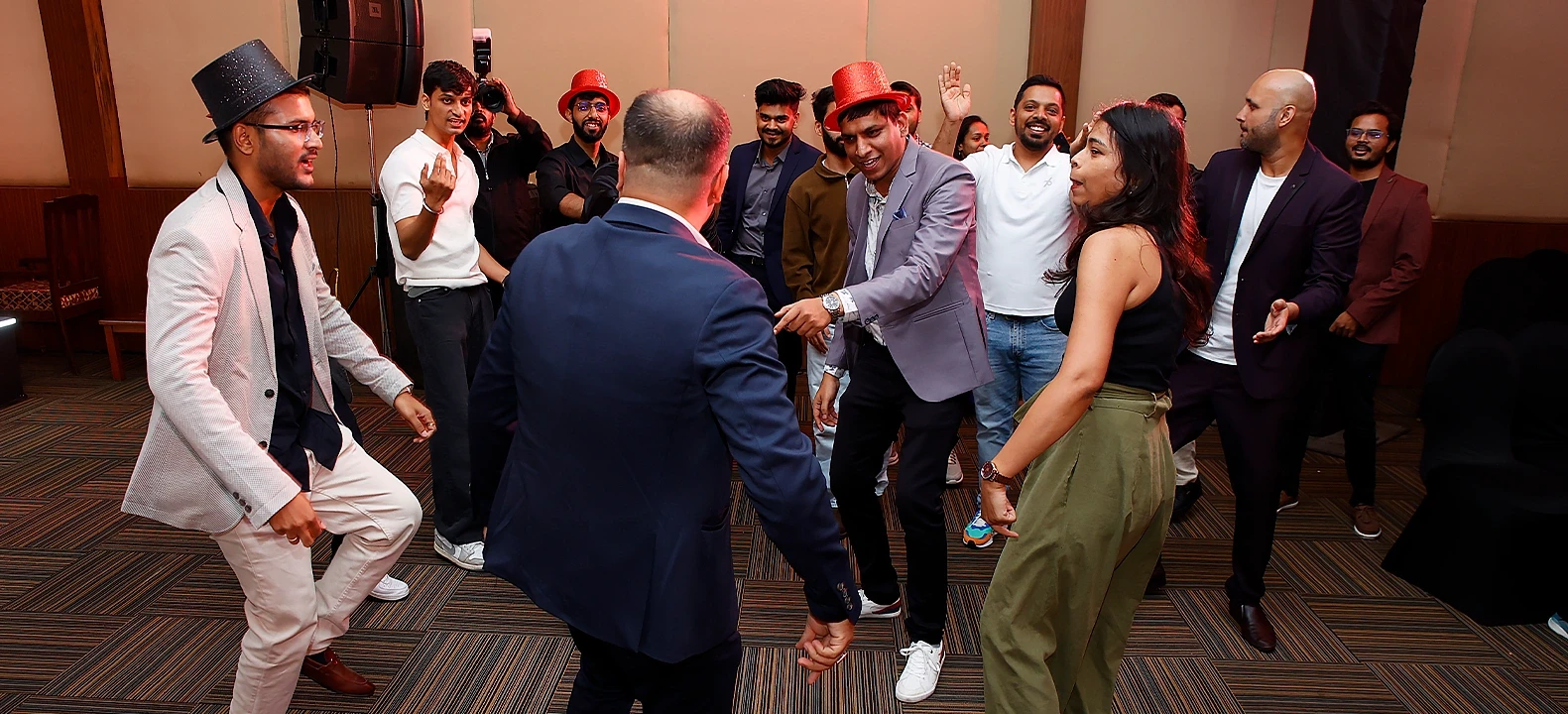

This is where things get technical, and where most in-house teams quietly hand over control because it's simply not their expertise. A proper run of show maps every minute of the event: who enters when, which mic goes live at what timestamp, when the lights dim for the video, when the CEO walks up, and when the photographer needs to be exactly where.
Some things a good run of show accounts for:
This document usually goes through five or six revisions before the event. Most clients only see the final, polished version. They never see version two, where half the timings were wrong and someone had double-booked the stage for both the dance performance and the award ceremony.
A week or so before the event, the good teams do something that looks almost old-fashioned. They physically walk the venue again. Not to admire the chandeliers, but to check where the extension cords will run, whether the loading dock can fit the truck bringing in the stage, and whether the WiFi actually holds up when 400 phones connect at once.
This is also when the smaller, invisible decisions happen. Where should the registration desk be placed so it doesn't create a bottleneck? Where do you place bins so the venue doesn't look like a mess by hour three? Which corridor do VIP guests use so they're not stuck in the general crowd flow? None of this is in the brief. All of it decides whether the event feels smooth or slightly chaotic.
Speakers rehearse. Hosts rehearse. But the best agencies also rehearse their own backstage team, going through cues, handovers, and worst-case scenarios almost like a fire drill. If the projector fails mid-presentation, does the backstage team know the backup screen sequence so no one panics on stage? That kind of preparation is invisible when it works, which is exactly the point.
When you're comparing corporate event management companies in India, don't just look at their portfolio of finished events. Ask what happens between the brief and the big day. Ask to see a sample run of the show. Ask how they handle vendor confirmations. Ask what their contingency process looks like. The agencies that answer these questions in detail, without getting defensive, are usually the ones who've been burned before and fixed their process because of it.
At SKIL Events, this is quite literally the boring middle of our job, and we've made peace with the fact that it's also the most important part. Twenty-four years of doing this across 1,500-plus events a year have taught us that the flashy parts of an event are easy to sell. It's the invisible planning in between that actually protects your event and your reputation on the day. That's the real difference between a best corporate event management company in India and one that simply looks good on paper.
It depends on scale, but for a mid- to large-scale event, expect two to four weeks of detailed planning, vendor confirmation, and rehearsals before execution.
Ask for their run-of-show process, contingency planning approach, and how they handle last-minute vendor issues. This tells you more than any past event photo will.
Usually, it comes down to skipped steps, like inadequate venue walk-throughs or rushed vendor confirmations, rather than a lack of talent on the team.
Almost always yes. The cost difference is usually small compared to the risk of a poorly executed event in front of clients, employees, or leadership.