Okay so here is a question that comes up more than you'd expect. Does scale actually matter for a product launch? Does putting 20,000 people in a stadium produce a better outcome than a tightly crafted 50-person reveal in a boardroom?
The honest answer is: depends what you mean by better.
SKIL Events has done both ends of this spectrum. Intimate launches where fifteen people in a room walked away completely sold. And stadium-scale events where twenty thousand people experienced something simultaneously that none of them stopped talking about. What makes either work has almost nothing to do with headcount. It has everything to do with whether the launch was designed around the product's story or around somebody's idea of what a launch is supposed to look like.
That distinction sounds subtle. It really isn't.

The majority of corporate product launches that don't land fail not because of budget or scale or venue. They fail because the launch was built around a format rather than a story.
Someone decided "we'll do a reveal with a countdown, then a video, then a speech, then Q&A." Every decision that followed was about executing that format. The format wasn't wrong necessarily. But it was decided before anyone answered the most important question: what do we need people to feel when they leave?
Feel, not know. Know is easy. A press release does that. A product launch event needs to make people feel something - conviction, excitement, belonging, urgency. When format is the strategy, feeling gets an afterthought slot after the Q&A. Which is why a lot of product launches are technically fine and emotionally forgettable.
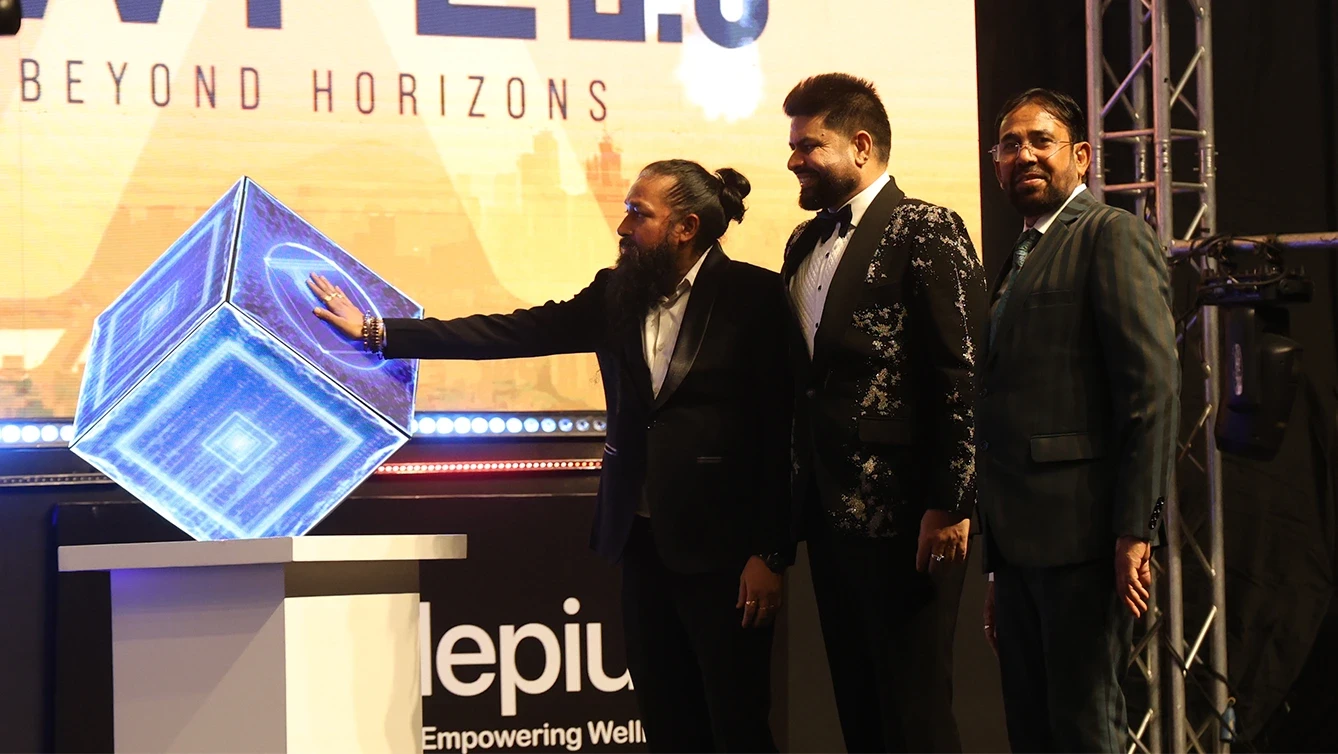
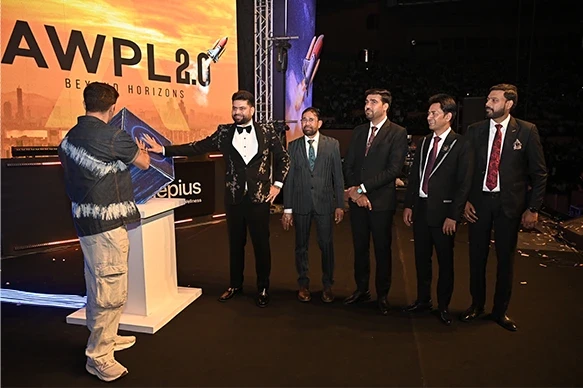
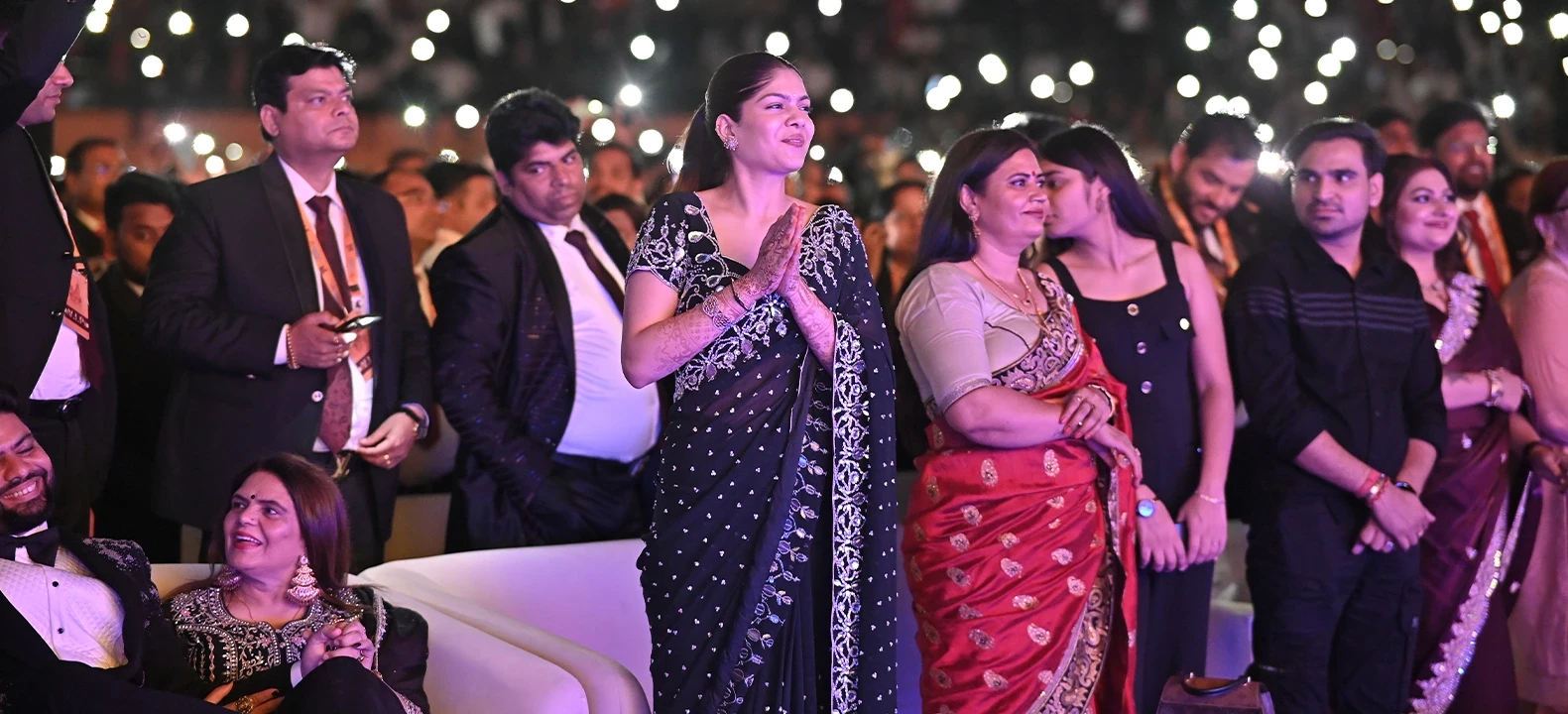
When SKIL Events took the AWPL 2.0 brief, the numbers were immediately intimidating. Twenty thousand attendees. Indira Gandhi Athletic Stadium in New Delhi. Two hundred and fifty product launches in a single day. Two hundred live performances. If you're reading that thinking "that sounds logistically impossible" - yeah, a little.
But what made this a landmark event wasn't the scale. It was the story SKIL built first. The direct selling industry runs on belief, community, the sense that what you're selling and who you're selling alongside actually matters. Twenty thousand people in that stadium weren't just a crowd. They were a community that had built something together. The launch needed to honor that.
So SKIL transformed Indira Gandhi Athletic Stadium into a multi-sensory brand universe. Not a venue with a stage in it. Every element from the entrance to the main arena was crafted to capture the pulse of direct selling at its most alive. Multiple zones with different energy signatures. VIP lounges that felt genuinely curated. And 250 product reveals each choreographed with light, sound, and emotional narrative so that launch number 178 hit as hard as launch number one.
That last part is actually a hard thing. Maintaining emotional momentum across 250 distinct moments in a full-day program for twenty thousand people. SKIL built a rhythm - periods of intensity, moments of pause, performance builds, crowd engagement that kept the room locked in from the first reveal to the last. The 200-plus artist performances weren't entertainment breaks. They were structural tools in the emotional architecture of the day.
The result was not just a successful product launch event management exercise. AWPL 2.0 became a new benchmark for experiential brand building in India's direct selling industry. People didn't just attend. They experienced it. Real difference.
The opposite end. Small group. High stakes. Decision-makers, media, investors, distribution partners.
The mistake with small launches is thinking intimacy buys permission to be less rigorous. "It's just 50 people, we don't need a full production." Right. Fifty people who could change the trajectory of this product in the next 24 hours.
What makes a small launch land is precision. Every detail has nowhere to hide. The room temperature. The moment of reveal relative to when people are seated. The story the presenter tells and whether it feels natural or rehearsed. The follow-up that happens within the hour after people leave.
SKIL Events approaches small launches with the same story-first thinking as stadium events. Different executional tools. Same question first: what do we need these specific people to feel when they walk out? Then everything builds backwards from that answer.
Here is what scale genuinely affects for corporate product launches. The surface area of the experience. At 20,000 PAX you can create collective moments - the simultaneous gasp when a reveal drops, the shared energy of twenty thousand people experiencing the same thing together. That collective experience is a feature of scale that intimacy cannot replicate.
But intimacy creates depth of connection that scale cannot replicate either. A 50-person launch where every guest feels personally addressed produces a different kind of conviction than any stadium event. Both are real. Both are valuable. They serve different strategic objectives.
A smart product launch organiser matches scale to strategic objective. Not to available budget. Not to how ambitious the company wants to appear. To what the product actually needs in the market at this moment.
Launching to a community who already believes? Scale serves you. The AWPL model was built for exactly this. Use the stadium. Use the collective energy.
Launching to decision-makers who need to understand before they commit? Intimacy serves you. Let the product breathe. Let the story land. Let questions get honest answers.
Here is something that doesn't come up enough in launch conversations. The energy your team carries into the day affects how it lands. And that energy is something you can actually design for.
SKIL Events builds team activation programming into launch weeks for exactly this reason. A Geo Hunt Olympics session the morning before a launch gets a sales team physically and mentally activated in a way three hours of product briefings never does. A Drum Circle the night before a large-scale event creates a collective rhythm in a team that shows up in how they move through the venue, engage guests, and handle surprises on the day. Squad Games that mirror the competitive dynamics of the market the product is entering? That is launch preparation that happens to be fun.
Product launch event management companies that understand this dimension are building something more complete than the ones treating team energy as an afterthought.
Not the logistics checklist. That exists and is necessary. But before the logistics there are five questions SKIL Events asks at the start of every launch brief regardless of scale.
What is the one thing we need people to feel? Not know. Feel.
Who specifically is in the room and what do they already believe?
What is the single most important moment - the thing everything else should build toward?
What does success look like 48 hours after this launch ends?
And what can go wrong that we can design around now rather than react to on the day?
Those five questions separate a launch brief from a logistics brief. The answer to the original question is this: scale doesn't determine whether a product launch lands. Story does. Structure does. The precision of the emotional experience does. AWPL 2.0 worked because twenty thousand people felt something simultaneously. The boardroom works when fifty people feel it individually and specifically. Both are hard. Both start with the same question.
Story before format. Forgettable corporate product launches are built around templates. The ones that land are built around what the product needs people to feel, with every decision flowing from that.
By matching scale to strategic objective. A product launch organiser who recommends the same approach for a 50-person trade audience and a 20,000-person community event hasn't thought carefully enough. Scale affects the surface area of the experience but story-first thinking is identical.
Team energy on the day. Product launch events live on execution which requires people in a specific state of activation. Pre-launch programming that physically and mentally prepares teams is underused and measurably changes execution quality on the day.
Through emotional architecture. Each reveal needs a distinct moment but the program needs rhythm - builds, peaks, pauses, recovery. Product launch event management companies with large-scale experience design that rhythm explicitly so the fiftieth reveal hits as hard as the first.
Any launch with genuine strategic importance. Once a product launch is meant to shift market perception or build community belief, the stakes justify professional management. Companies that try to scale product launch execution internally often discover the limits of that approach publicly.